
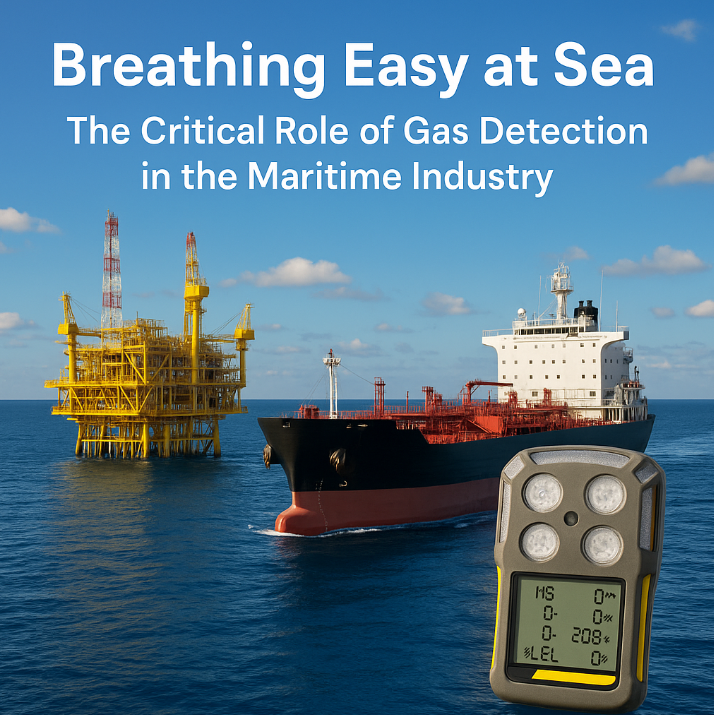
The Critical Role of Gas Detection in the Maritime Industry
Imagine this: you’re 40 nautical miles off the coast, surrounded by nothing but open water, steel, and sky. Below deck, the hum of machinery is constant. It’s hot, it’s noisy, and the air can feel thick. This is the reality for thousands of seafarers who work tirelessly to keep global trade moving. But what happens when that thick air becomes dangerous?
Gas detection may not be the first thing that springs to mind when you think of life at sea, but it’s one of the most vital parts of onboard safety. Let’s break down why it matters—and how it’s changing the game for safety, compliance, and peace of mind across the maritime industry.
The Invisible Threats on Board
From oil tankers to cargo ships, offshore rigs to chemical carriers, vessels in the maritime world are complex ecosystems of fuel, chemicals, machinery, and confined spaces. That mix creates a high potential for hazardous gases to accumulate—many of which are odorless, invisible, and deadly.
Some of the usual suspects include:
- Hydrogen Sulfide (H₂S): Found in crude oil and natural gas, this gas smells like rotten eggs (until it doesn’t—then it’s already affecting your senses).
- Methane (CH₄): Common in cargo holds and engine rooms, particularly on LNG ships.
- Carbon Monoxide (CO): Odorless and invisible, it can build up from faulty exhaust systems.
- Oxygen Deficiency: Not technically a gas, but a lack of O₂ is just as deadly and common in confined spaces.
A single unnoticed leak or low-oxygen zone can result in a fatal incident. And the sad truth? Many of these accidents are preventable with proper gas detection.
Gas Detection: More Than a Tick-Box Exercise
There was a time when gas detection was viewed by some as just a compliance requirement—“tick the box and move on.” But attitudes are shifting, and for good reason.
Modern crews, ship owners, and operators understand that gas detection is an investment in life-saving technology, not just paperwork. A well-calibrated detector or testing tube isn’t just a tool; it’s a safety net that can mean the difference between life and death.
And that’s where the maritime industry is seeing real progress:
- Digital gas detectors with real-time alerts.
- Calibration gases used to test equipment regularly.
- Training programs to make sure every crew member knows what to do and when.
- Easy-to-use gas tubes for spot checks in hard-to-reach or confined spaces.
Real Life, Real Risks
If you’ve ever stepped into a ballast tank or engine room, you’ll know how quickly a space can feel claustrophobic. Add a gas leak into that scenario, and the danger becomes very real, very fast.
There are countless examples—many unreported—of near misses where crew members detected toxic gases just in time. Sadly, there are also stories of lives lost due to faulty equipment or lack of training.
One chief engineer described how a portable detector saved his life when he entered a pump room alone (a practice now discouraged). His alarm went off within seconds—H₂S levels were well over the safe limit. Had he not had that detector, he may never have walked back out.
It’s Not Just About Humans
Gas detection is also crucial for protecting cargo, equipment, and the environment. A flammable gas leak can lead to fires or explosions. A slow oxygen leak might damage sensitive cargo. And failure to detect gas releases can result in environmental fines, not to mention reputational damage.
And let’s not forget compliance. With the IMO, flag states, and port authorities tightening safety regulations, especially around confined space entry, reliable gas detection systems are no longer optional—they’re expected.
Bridging the Gap with Simplicity
Here’s the good news: gas detection technology is becoming more accessible and user-friendly than ever. It’s not all blinking lights and endless manuals.
Take colorimetric gas detection tubes, for example. You don’t need to be a scientist to use them. Just insert the tube into the pump, draw a sample, and check the color change. It’s quick, reliable, and perfect for spot checks—especially in remote areas where electronics might fail.
That simplicity is what makes them so popular onboard. Training new crew members to use them is easy, and they don’t require batteries, Wi-Fi, or calibration. Just pump and read.
A Culture of Safety Starts with Awareness
At the end of the day, the best detection tools in the world won’t help if no one uses them—or worse, if they don’t know how to. That’s why education, training, and leadership matter so much.
Encouraging open conversations about safety, making gas detection part of daily routine, and making it okay for anyone—no matter their rank—to raise a concern… that’s the kind of culture that saves lives.
Looking Ahead: Innovation Meets Responsibility
The future of gas detection in maritime isn’t just about better tech—it’s about better integration. Smart systems that link detectors to bridge alarms. Apps that track calibration dates and alert you before something goes out of spec. AI-driven analytics that predict high-risk areas based on environmental conditions.
But at the heart of all this? People. Seafarers. Engineers. Safety officers. Suppliers. We’re all in this together.
Final Thoughts
Gas detection in the maritime industry might not be glamorous, but it’s one of the most essential lifelines out there. It’s about making sure that when someone steps into a pump room, an engine space, or a cargo hold, they come out again. Alive. Healthy. Safe.
So, whether you’re a chief engineer, a deckhand, a purchasing officer, or a supplier—you have a role to play. Check the equipment. Train the crew. Ask the questions. Share the stories.
Because at sea, safety doesn’t come in waves. It comes from awareness, action, and making gas detection a part of everyday life.
Stay safe out there—and breathe easy.